
Listen to audio version
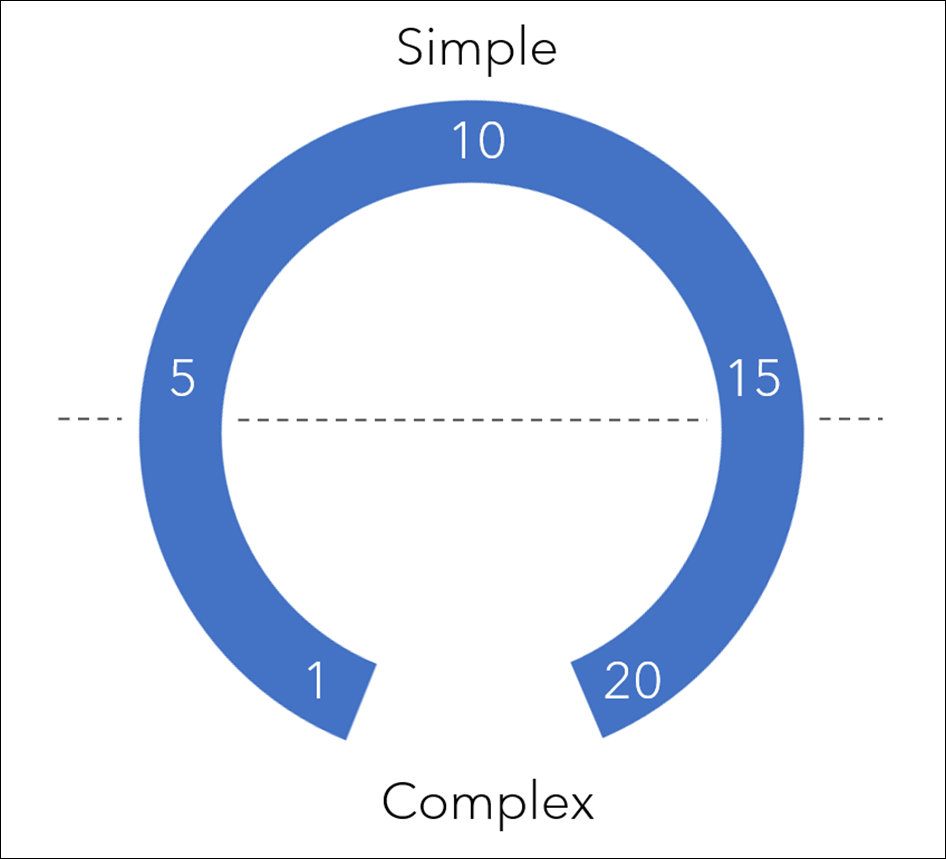
A client I was working with recently asked me how many notebooks she should keep active in Microsoft OneNote. She wanted to know the optimal number for ease of use and access to information. My answer was ten, plus or minus five. That means ten is ideal, but anywhere within the range of five to fifteen notebooks was fine.
On reflection, I realised this was the same answer I would give if asked how many email filing folders were ideal, how many MS Teams channels you should actively monitor, or how many project plans should be active in a tool like MS Planner. If we went old-school, the rule probably applies to paper folders on your desk as well. For most of us, when we are trying to organise and manage information using a structure, having too few or too many layers creates complexity.
A practical example in OneNote
Let me illustrate with an example. I often see people using OneNote, a brilliant information management tool, to manage everything from meeting notes to project information. But what a lot of people do is just use the default notebook that opens when they first start using OneNote. This means they keep everything in one notebook, making it hard to organise and retrieve the information when needed. The other extreme is they create thirty-five different notebooks and then can never remember which notebook they put things in!
Both situations are too complex in my view. That is why I recommend creating multiple notebooks as needed, but closing any inactive ones, and keeping five to fifteen open in OneNote at any one time.
Why email filing might be an exception
In most cases, one big bucket for everything is too complicated and not useful. It is just as complex as having too many buckets. But there is an exception to this rule.
Those of you who have attended our Smart Work or Lead Smart training will know my view on email filing. I have for many years just used one email filing folder to store any emails that are finished with, but I want to keep for future reference. Ha! What about that? Isn’t one email filing folder too complex according to the rule of ten?
In this case, no. The thing that cuts through the complexity in an email filing folder is the search function. By storing all the emails in one folder and building a search when I need to find something, I bypass the need for structure and let search simplify the complexity for me. This means I don’t feel the need to have five, or ten, or fifteen filing folders.
So, whenever you have a tool like search, or AI, that can cut through the complexity for you, then relax the rule. But if you are relying on structure to help you to quickly access information, the rule of ten (plus or minus five) will serve you well.