
Listen to audio version
I lost my uncle Patrick McCarville last month. He was a great man and had a great life – a life most would not believe. He went to London from Dublin in the early 1960’s to become an actor. He was tall, good looking and charismatic, and soon found himself running with a who’s who of 1960s London. He regularly partied with Richard Harris, Michael Caine, Brendon Behan, Peter O’Toole, and Laurence Olivier! In fact, he was sacked by Olivier (or Larry as he called him) from his theatre company for drinking too much! I reckon that is the pot calling the kettle black.
Knowing that he was probably not going to make it as one of the greats on the silver screen, he also dabbled in journalism and got a job as a war correspondent in the middle east and Africa. He then ended up in Australia where he continued his journalistic career, along with acting gigs in Skippy, The Young Doctors and the Mission Impossible TV series to name a few. He even wrote the screenplay for a Billy Connely movie, The Man Who Sued God. After all of this, in his later years he became the ambassador for Irish Whiskey in Australia and had a great career telling stories about his life while promoting Irish Whiskey. Phew!
So many of the stories he told me seemed to have a touch of the blarney to them – a little too amazing to be true. But then he would get out the photo of him playing golf with Bill Clinton, or the newspaper article about him and Peter O’Toole, and you knew there was truth behind the stories. Maybe embellished a bit, but we forgive him that as he was Irish! He was a great man and I will miss him.
I learnt a lot from Patrick, but one small lesson has stayed with me more than any other. When I first started writing books, he gave me a hack to avoid writers block. He told me that when I finished writing for the day, I should stop mid-sentence. That way, when you came back to it, all you had to do was finish the sentence and you were away. Such a simple idea, and one that I have used more than a few times. Looking back, what made this advice so effective wasn’t really about writing. It was about making it easier to start again.
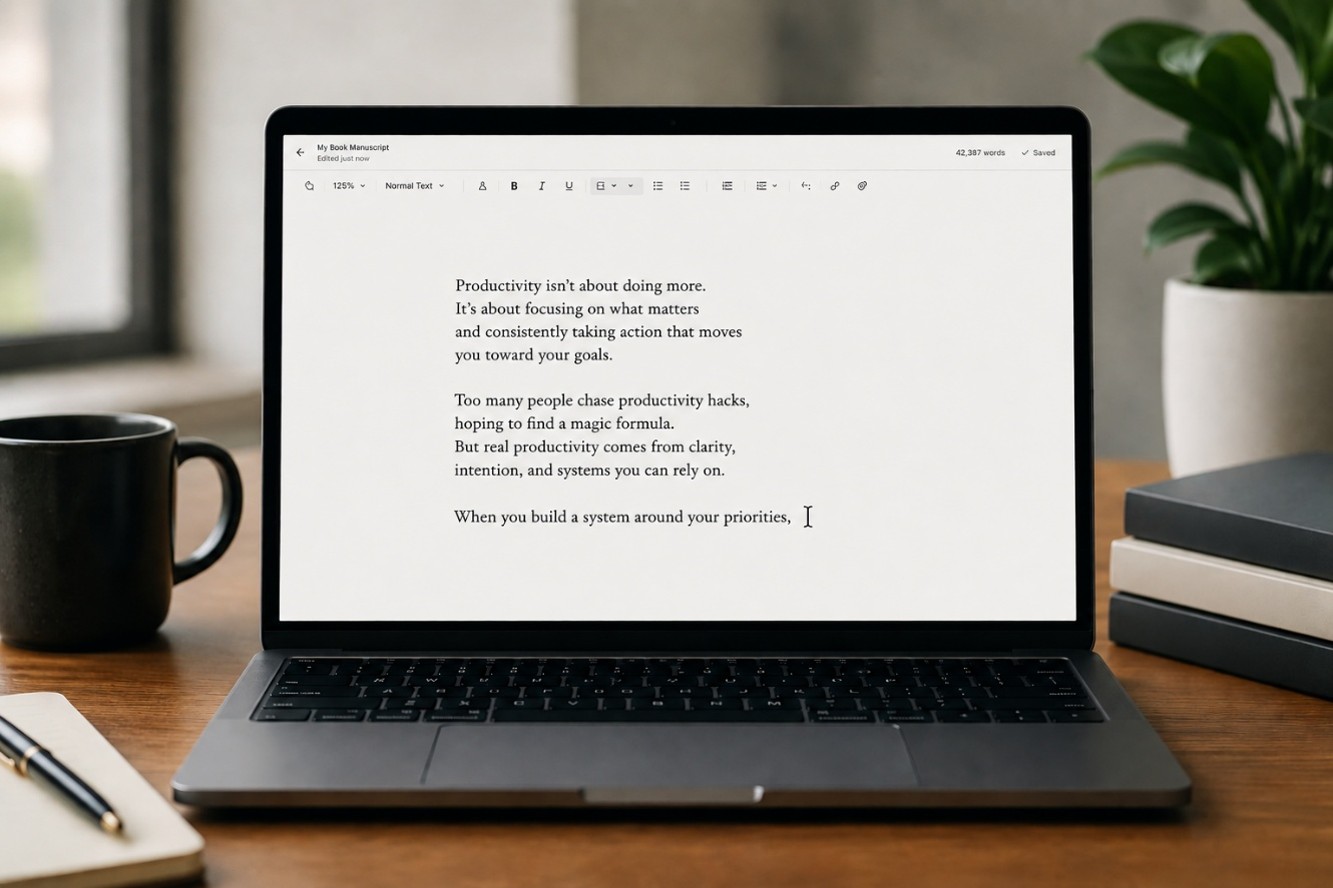
While this is a writing specific hack, it illustrates a broader strategy for getting your head into deep-focus work. It’s about removing barriers to taking the first step.
When we need to work on something that is complicated, and requires deep thinking, it can be hard to know where to start, especially when we are trying to fit this work into the cracks between meetings. The work can feel overwhelming, and we are at risk of procrastinating if we are not careful. Having a clear picture of what you’re trying to achieve, what you’ve already done, and what still needs to be done can help you get your head into the game quickly.
This is where something like a checklist for the work can be useful. Breaking the work down into a series of subtasks in a simple list allows us to have a clear picture of all of the work that is needed, what we have already done, and what the next step is. A bit like Patrick’s strategy with the unfinished sentence, we can pick up where we left off more easily when coming back to a piece of work.
This is one of many strategies that you could use to get traction, build momentum or get to completion with complex work. Thinking about how you approach deep focus work can remove a lot of friction and ensure that when a window of time opens, you can make the most of it. Why not take a moment to think about how you approach deep work and what barriers might be getting in the way? And next time you raise a glass of whiskey, say ‘Slainte’ to my uncle Patrick. He would like that.