
Smart Teams Program
Smart Teams, based on the book Smart Teams, is a series of large group masterclasses designed to create healthier communication, meeting and prioritisation cultures that allow productivity to flourish. But it is more than just a presentation, it is a project that we will build with you to ensure a long-term shift in culture for your wider team.
Smart Teams Program in action
Imagine working in a team culture where everyone worked together with minimal communication noise, balanced meeting workloads and a focus on importance rather than urgency.
We all want to do our best work, but often the productivity cultures we work within get in the way and stop us from being our most productive selves.
The constant deluge of email and communications, the never ending series of meetings we are expected to attend, and the pressure of constant urgency all serve to distract us from our most important priorities. And as AI features become part of everyday tools, teams need clear principles to make sure these tools reduce noise rather than add to it.
The good news is that culture is just a set of group behaviors, and behaviors can be changed.

Create healthier team cultures
Smart Teams is made up of three large-group masterclasses designed to help everyone in your organisation or division to shift their behaviors and shift the culture.
The masterclasses can be run as a series, or you can choose the productivity culture you want your team to focus on.
Each masterclass explores a productivity culture – Communication, Meeting culture or Prioritisation culture.

Who is the program for?
Smart Teams is ideally suited to organisations, divisions or large teams who want to create healthier productivity cultures, and are keen to either reduce communication noise, reduce time in ineffective meetings or reduce unnecessary urgency.
These masterclasses are a great next step for teams that have undertaken the Smart Work or Lead Smart programs, but these are not a pre-requisite.
The Smart Teams approach
Cultural change is never easy, especially in large, complex teams. But when it comes to sustained productivity and performance, it is essential. Culture is just a set of group behaviours and beliefs, and if not intentionally crafted, the culture can take on a life of its own, causing a massive amount of disruption to everyone’s productivity.
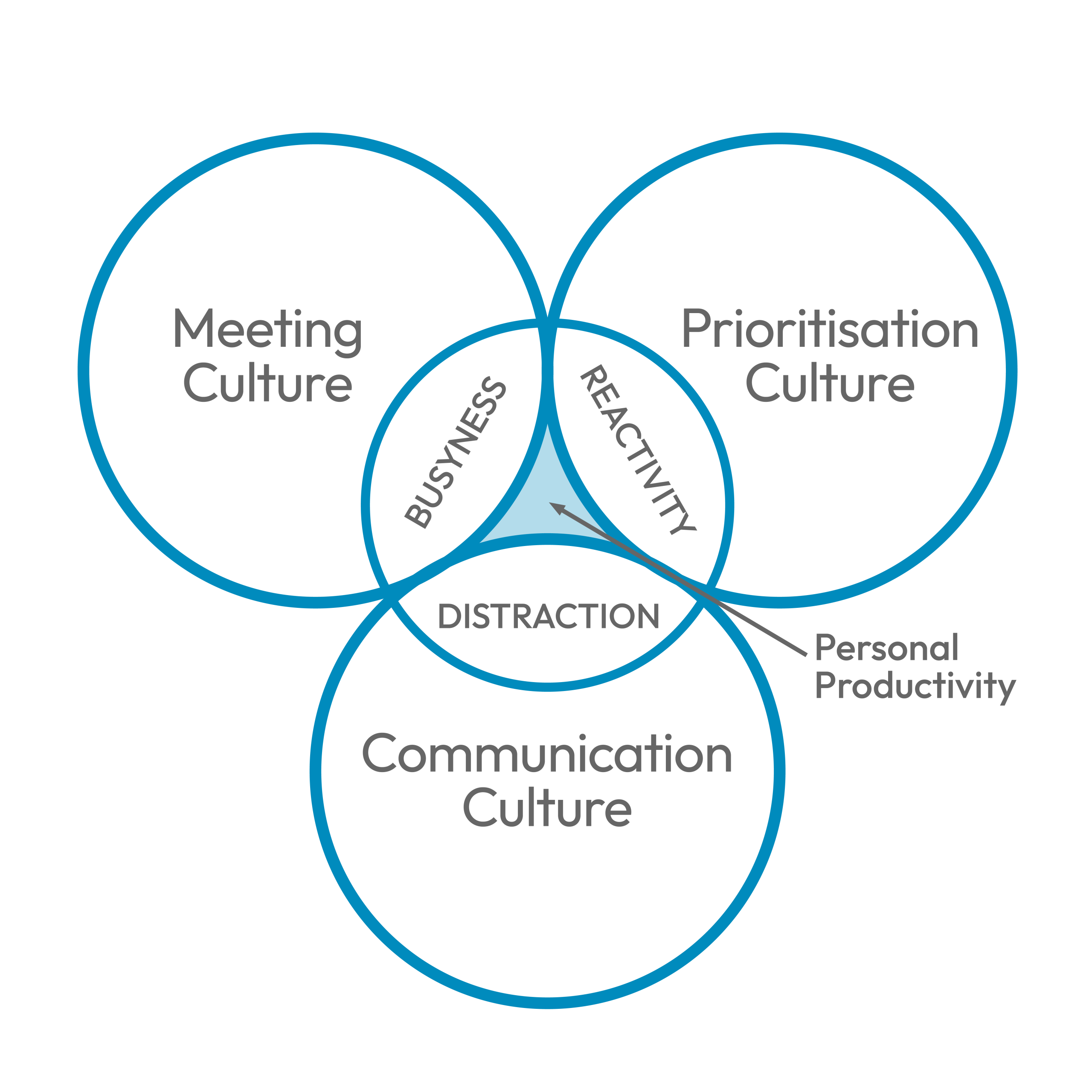
Your team’s communication culture, meeting culture and prioritisation culture may be causing too much distraction, busyness and reactivity. These productivity blockers serve to disrupt personal productivity and reduce the capacity of your team.
The Smart Teams Masterclass series turns:
- Distraction into focus – Communication Culture
- Busyness into impact – Meeting Culture
- Reactivity into proactivity – Prioritisation Culture
Each masterclass is designed in three stages to maximise the impact of the event itself, and to fully equip your team to create a meaningful cultural change.
Don’t just take our word for it
James Redgrove, General Manager - Safety Systems, DreamworldThe tools we have gained from your course have got me well and truly out of that ‘hurry sickness’ cycle of reactivity. So not only has your course made me more productive, but it might just stop me dropping dead from a stress related heart attack too.
Lesley McKay, General Manager Tasmania, The Smith FamilyDermot has guided our team through ‘Smart Work’ and ‘Smart Teams’ for over two years, with his knowledge and personal work practices flowing into his books and training, delivering transformational results. Team members now experience greater control and ease, and we have adopted a shared ‘productivity’ language and culture. In ‘Urgent!’ he provides a practical guide to recognise unhelpful reactivity, understand the harms of unfettered urgency, and create a balanced, responsive culture where important work gets done, creativity and growth thrive, and our requests reflect the values we uphold.
Paul Gracey, Director - Printing Systems, HPWhile we all aspire individually to work smarter, it is not until you shift an entire team to achieve this that you realise the true scale and benefits. Smart Teams is an excellent reference for leaders and individuals alike. Allowing you to not only develop good habits, but more importantly create a team culture of productivity and efficiency.
Lesley McKay, General Manager Tasmania, The Smith FamilyDermot has guided our team through ‘Smart Work’ and ‘Smart Teams’ for over two years, with his knowledge and personal work practices flowing into his books and training, delivering transformational results.
Team members now experience greater control and ease, and we have adopted a shared ‘productivity’ language and culture.
In ‘Urgent!’ he provides a practical guide to recognise unhelpful reactivity, understand the harms of unfettered urgency, and create a balanced, responsive culture where important work gets done, creativity and growth thrive, and our requests reflect the values we uphold.
James Redgrove, General Manager – Safety Systems, DreamworldThe tools we have gained from your course have got me well and truly out of that ‘hurry sickness’ cycle of reactivity. So not only has your course made me more productive, but it might just stop me dropping dead from a stress related heart attack too.
Smart Teams program overview
The Smart Teams masterclass series reduces the productivity friction that your team experiences as they go about their work. Each masterclass focuses on a different productivity culture, and will achieve the following outcomes.
Outcomes
- Communication Culture: Enhance how your team use email and other tools to communicate and manage workflow
- Meeting Culture: Improve how your team manage all aspects of meetings and reduce time in unnecessary meetings
- Prioritisation Culture: Prioritisation Culture Masterclass will transform how your team prioritise their work and manage unnecessary urgency
Our program pricing varies depending on a range of factors including session length and group size.
Contact us about pricing for your program.
Ready to become more productive?
Our team is here to help your business become the productive powerhouse it needs to be. Let’s have a chat!

FAQs
What is Smart Teams?
Smart Teams is a program designed to improve how teams work together. Drawn from Dermot Crowley’s book Smart Teams, it helps organisations reduce communication noise, cut unproductive meeting time, and build a culture where important work gets prioritised over reactive, urgent demands. The program uses practical team agreements and staged implementation to shift behaviours, making it well suited to teams that have good individual skills but struggle with how work flows between people.
Who is Smart Teams designed for?
Smart Teams is ideal for intact teams or departments wanting to improve how they communicate, meet, and prioritise as a group. It works well for teams of any size and can be delivered across a single team, a division, or an entire organisation.
What does Smart Teams cover?
The program is structured around three team cultures: communication, meetings, and prioritisation. Teams look at how to reduce email and chat noise and improve message quality, how to cut time spent in meetings while increasing their impact, and how to minimise unnecessary urgency so the team can focus on what is genuinely important. It also addresses how to manage AI-generated content, so it supports rather than adds to the noise.
How is Smart Teams delivered?
Delivered online or onsite as an individual masterclass or a series of masterclasses, each targeting a specific culture. Sessions are practical and grounded in real team scenarios and can be run as standalone two-hour sessions or as part of a broader culture change project with internal champions and ongoing support.
What results can participants expect?
Teams report reduced reactivity, greater control over their workload, and improved collective productivity. Participants consistently describe feeling less overwhelmed by communication and meetings, with more time available for focused, high-value work.
Can Smart Teams be customised for our organisation?
Yes. We tailor sessions to your team’s specific challenges, whether that’s hybrid collaboration, meeting overload, or communication habits. For deeper change, the Smart Teams Culture Project pairs the masterclasses with a three-month embedding program supported by internal champions and group mentoring.